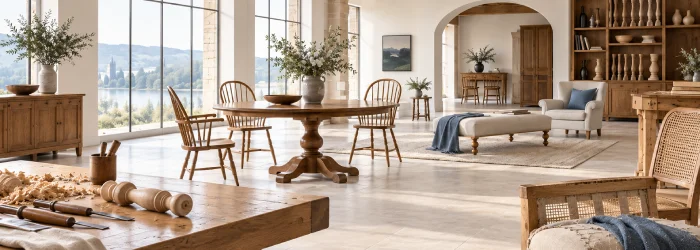
The Specialist Techniques Used
Traditional furniture requires a lot more specialisation than modern manufactured sets. Specialist equipment, resources, and engineering are vital to creating these pieces, and mastering the trade can take years to achieve. This furniture does tend to be more expensive, especially if it uses materials like hard oak, specially woven upholstery or laborious French polishing. Though the pieces are designed to last, and these tradespeople are the very same who can restore, refurbish and repair existing furniture.
Upholstery and Sourcing Materials
Upholstery is the trade of creating surfaces for furniture, such as fixing padding to chairs or spring systems and fabric covering for sofas. But with traditional techniques, it can go into a lot more detail, from sourcing rare materials to building surfaces for deep comfort.
The furniture can use materials such as horsehair, wool, linen, cotton, coir and natural webbing, alongside springs and other components. These materials can provide a very different feel and appearance to the synthetic foams and fabrics commonly found in modern mass-produced furniture. Emphasis is also placed on how the final product looks, creating a piece of furniture that not only feels good but aesthetically fits the design concept.
Chair Caning and Rushing
Caning and rushing are the methods used to create the seat and the back for chairs. Caning generally involves weaving strands of rattan through a prepared chair frame, to create a strong surface that still supports some flexibility. The weaving patterns are what can add tensile strength or increase rigidity. Rush seating uses natural fibres that are twisted, woven or wrapped around the chair frame.
These require years of practical experience and knowledge of the materials used, which experts must vet carefully to ensure that the seats are functional. As fewer furniture makers are trained in these techniques, chair caning and rushing have increasingly become specialist restoration skills.
Woodturning and Chair-making
Traditional wooden furniture features twisted or rounded decorations, at the legs, spindles, knobs, or fixed into other areas. These are made by woodturning, a specialist technique that needs woodworking tools and a strong feel for the materials. From selecting the timber to constructing robust joints, shaping the frame, and considering the durability of the furniture, it is a vital part of table and chair making.
One of the most well known examples in Britain is Windsor chairmaking, where chairs are constructed with a solid wooden seat and spindles and separate legs into a distinctive form.
French Polishing and Established Finishing Techniques
French polishing is a finishing method that involves applying numerous thin layers of shellac using a polishing pad, gradually creating a deep, smooth and glossy surface. Alternatively, there are methods such as waxing, oiling, staining and traditional varnishing, all of which have their own unique application. It can depend on the type of wood, the age of the furniture or materials, and the final look that the constructor is trying to achieve.
Proper finishing does not just complement the material's character in an aesthetic way, it should also serve as protection, and these methods are highly sustainable, so they can be repaired or restored if the original finish is damaged or aged.