Why Reclaimed Materials Add Depth to Furniture and Lighting
There's something a new oak plank simply cannot fake: the grain variation and surface richness that comes from decades of use. Salvaged timber pulled from Victorian mill floors or demolished warehouses carries a patina – a natural darkening and texture built up over time – that mass production cannot replicate.
Old glass and salvaged metal bring their own qualities. Slightly imperfect, slightly uneven, they give pendant lights and cabinet frames a one-off character.
British makers working from small workshops in places like Derbyshire or the Scottish Borders often source reclaimed timber locally, keeping material miles low without making a performance of it. The craftsmanship does the talking. Each piece ends up genuinely unrepeatable.
Where Function Meets Style in Reclaimed Design
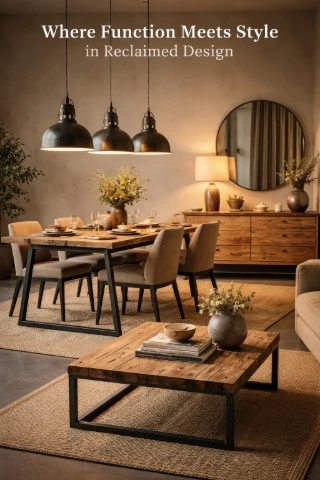
Pendant lights made from salvaged factory metal do two things at once: they throw warm, directional light across a dining table and act as a focal point in their own right. Table lamps with turned oak or ash bases carry the same logic. The fitting is new, the timber is not, and that contrast is exactly what gives the piece presence.
Furniture follows similar thinking. A coffee table built from reclaimed scaffold boards gains grounding when paired with powder-coated steel legs rather than more wood. Brass handles on a salvaged-timber sideboard add warmth without fussiness. These pairings work because the new material provides clean lines, letting the old material carry the character.
How Colour, Pattern, and British Craft Bring Pieces to Life
A coat of paint can completely reframe a salvaged cabinet. Deep greens, chalky blues, and warm terracottas are popular choices among British makers, softening the rawness of reclaimed wood without hiding its grain or texture. Patterned lampshades – think block-printed linen or bold geometric repeat – add visual contrast against an aged timber base.
When shopping for reclaimed or craft-led pieces, look for solid joinery, honest transitions between old and new materials, safe electrical rewiring, and proportions that actually suit your room.
Small-production studios like those found across Yorkshire and the Welsh Marches often hand-finish every piece individually. That limited-run quality means no two items are identical – which is precisely what makes reclaimed design feel personal rather than assembled.
Character Is What Makes Reclaimed Pieces Last
Salvaged timber with a century of grain, a rewired factory pendant, a stool made by a Shropshire craftsperson from reclaimed scaffold boards – these things carry something mass production simply cannot manufacture. The best reclaimed furniture and lighting work because they combine genuine function with texture, history, and a sense that the object has already lived somewhere. Furniture Restoration can also help preserve these qualities while adapting older pieces for continued use. Mixing old materials with new making is what British makers do particularly well, producing pieces that feel individual rather than catalogue-familiar. When you're choosing something for your home, look past the trend and ask whether the piece has real quality, honest material, and enough character to still feel right ten years from now.